Healthcare & rehabilitation
Assessment, physiotherapy and occupational therapy, so children can build mobility and independence in daily life.
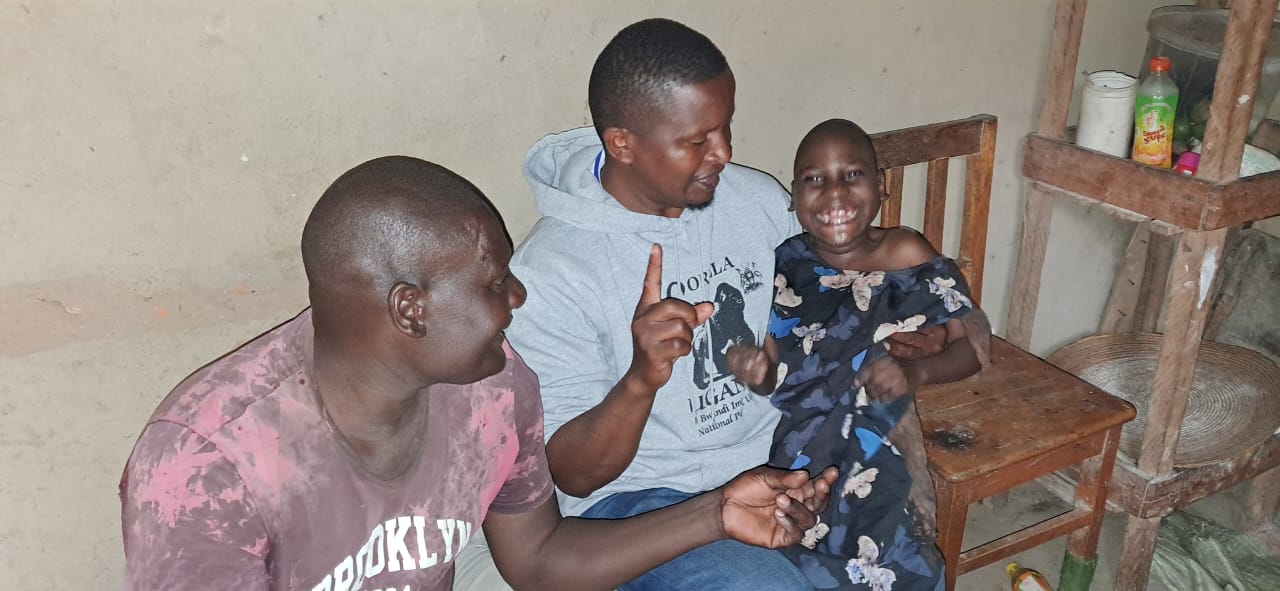
We walk alongside children with disabilities and their families in the Kigezi region, helping them reach healthcare, rehabilitation and learning.
Kigezi Home of Children with Disability was founded by Asiimwe Andrew to stand with children who live with disability and the families who care for them, often with very limited resources.
Too many children in our communities never see a therapist, never sit in a classroom and never hear that progress is possible. We visit families at home, listen, connect them with trained professionals and keep showing up.
Our story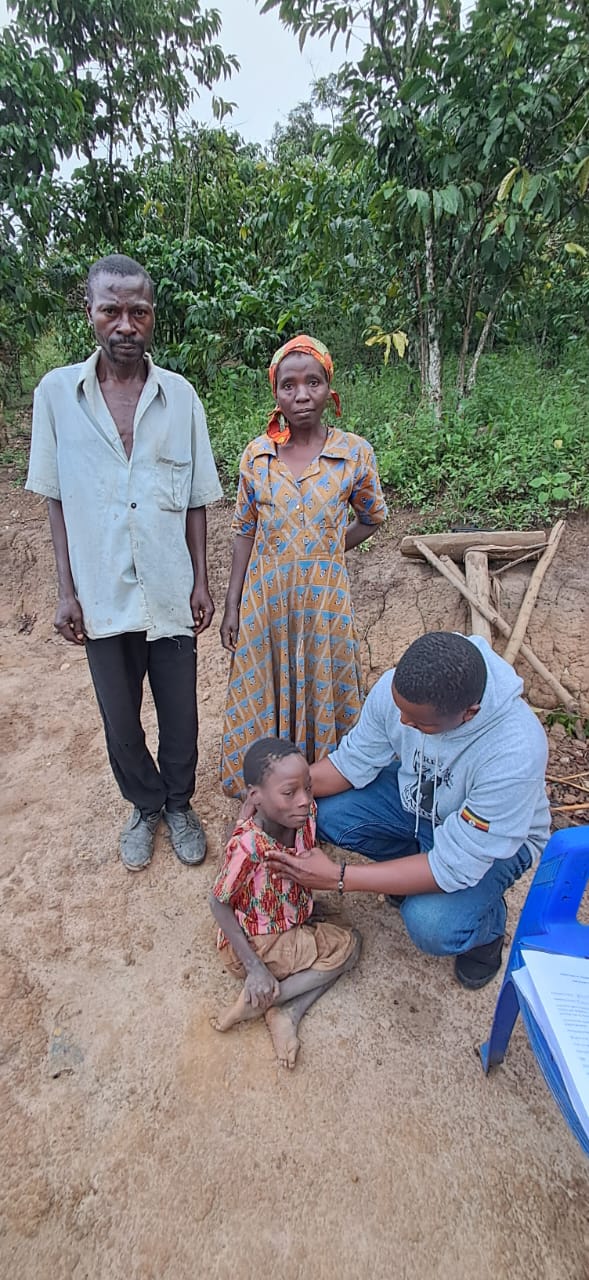
Assessment, physiotherapy and occupational therapy, so children can build mobility and independence in daily life.
Working with families and schools so that a disability never decides whether a child gets to learn.
Practical encouragement and guidance for parents and carers, who are every child's first and most constant support.
Behind every child is a family, a name and a future worth investing in.
Every child is treated as a person first, with a name, a voice and a right to respect.
Children belong in their families, schools and communities, not on the edges of them.
We work with families, health professionals and organisations who share our goals.
We are honest about what we do, what we learn and how support is used.
Partner with us, volunteer your skills or help a family reach the care they need.
Who we are, why we exist and how we work in the Kigezi region.
Kigezi Home of Children with Disability is a community-based organisation serving children with disabilities and their families in the Kigezi region of south-western Uganda.
Our work begins at the family's doorstep. We visit homes, listen to parents and carers, understand each child's needs and help connect them to assessment, rehabilitation, education and encouragement they might not otherwise reach.
We believe a child's circumstances should never decide their future, and that with the right support, children with disabilities can learn, grow and take part fully in family and community life.
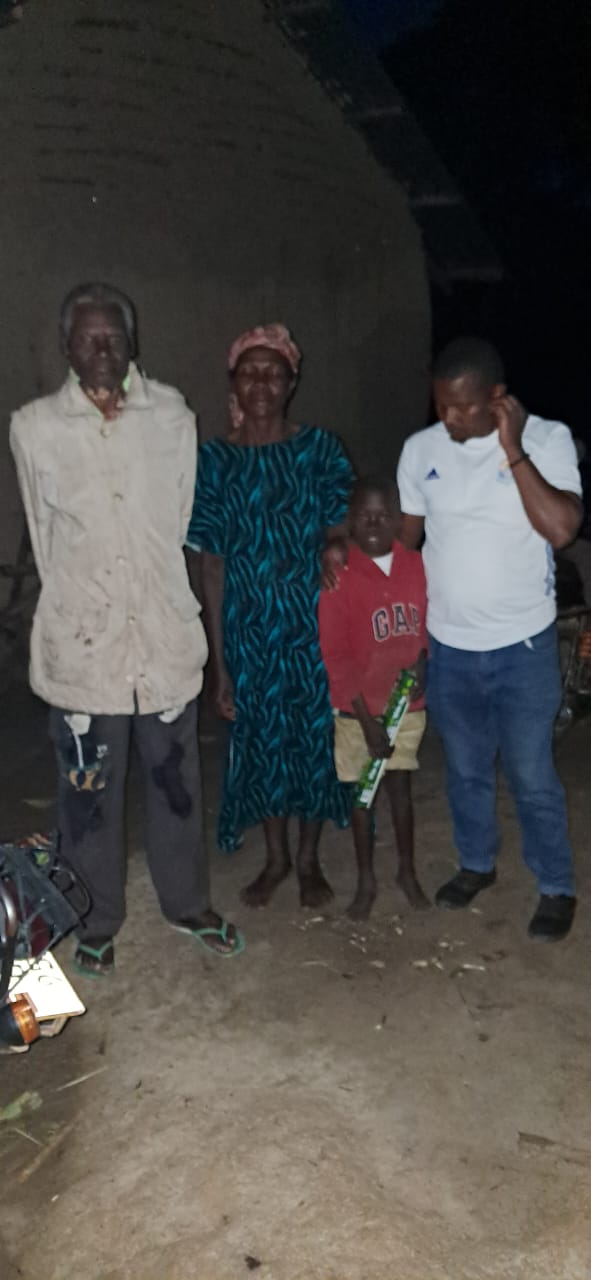
To promote the dignity, health, education and inclusion of children with disabilities by supporting their families and connecting them with appropriate care and opportunity.
A community where every child with a disability is valued, supported and able to reach their full potential.
Asiimwe Andrew founded Kigezi Home of Children with Disability out of a commitment to children who are too often left out of healthcare and education. He personally leads visits to families and works with partner organisations and health professionals to bring assessment and support closer to the children who need it.
We meet children and families where they live and listen before we advise.
With partner professionals, we help identify needs and link families to therapy, healthcare and schooling.
We keep supporting families and encouraging progress, because one visit is never enough.
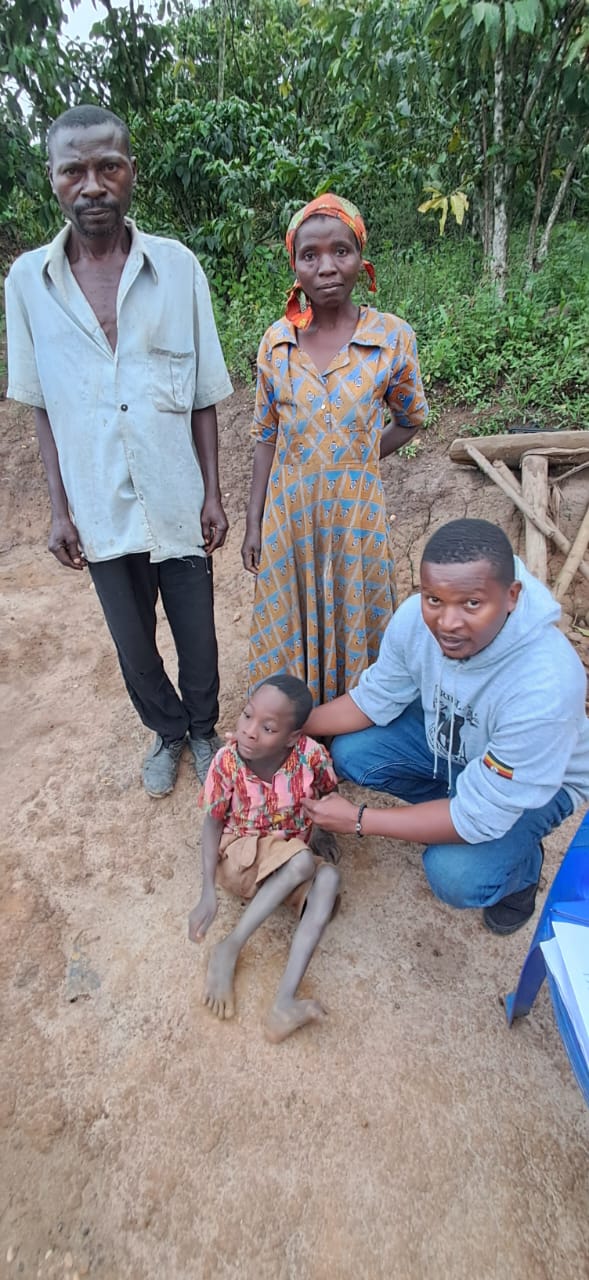
We work alongside organisations that share our commitment to children with disabilities, including the Readied Feet Foundation, whose public health specialist joined our team on recent family visits.
Real children, real families and the opportunities they deserve.

Desire Agaba is a 10-year-old girl born on 20 June 2016 to Niwagaba Dickens and Ainembabazi Loy. She is the youngest of four children, all girls, and lives with her family. Desire’s story began with an unexpected tragedy before her birth. During her mother’s final antenatal visit, her parents were involved in a motorcycle accident while travelling to the hospital.
Recounting the experience, Desire’s father, Dickens, described the uncertainty that followed. “My wife and I left home on a motorcycle to go to the hospital. We got into an accident. After several days, I regained consciousness and found myself on a hospital bed. I asked about my wife and was told that she was also admitted. Three days later, I was informed that she had delivered, but the baby was weak,” he recalled.
Desire was born prematurely. According to her mother, she had visible bruises on her shoulder, forehead, and back at birth. The family subsequently faced the challenge of understanding and responding to Desire’s developmental needs. As Desire grew, her family observed that she had difficulty controlling her head. Concerned about her development, they sought medical attention when she was approximately one and a half years old. According to the family, Desire received medical care and subsequently made progress. One significant improvement was her ability to hold her head upright, something she had previously struggled to do. However, accessing continued healthcare and support has not been easy. Financial constraints have prevented the family from returning to the hospital for further assessment and follow-up care. Despite these challenges, Desire’s parents remain committed to providing for her and meeting her daily needs.
“We do what we can,” her mother explained, reflecting the family’s determination to care for their daughter despite their limited resources.
For Desire’s father, caring for his daughter has also meant developing a close bond with her and learning to understand her needs. He explained that he does his best to ensure she is comfortable and has what he can provide. “I make sure she has what she needs. We have developed a strong bond, and I understand what she wants. I try my best to provide for her. She likes soda, and I make sure she gets it whenever I can. That is her share, just as the other children go to school,” he explained.
His words reveal a father’s commitment to his daughter, but they also highlight a difficult reality: Desire is not attending school, and her father fears that she may never have that opportunity. His concern raises an important question about the educational opportunities available to children with disabilities and the support families need to help their children participate in learning.
Desire’s story highlights the challenges families face in accessing healthcare, rehabilitation, and educational opportunities for children with disabilities. Financial constraints can limit access to essential services, leaving families struggling to meet their children’s needs. Every child deserves dignity, inclusion, and an opportunity to learn and develop their abilities. Desire’s circumstances should not determine her future. Appropriate medical assessment, rehabilitation, inclusive education, and family support could improve her quality of life.
Desire deserves the opportunity to reach her full potential. Supporting her is a shared responsibility.
Visiting team.
Asiimwe Andrew. Kigezi Home of Children with Disability
Angello Rutaremwa. Readied Feet Foundation
By;
Angello Rutaremwa,
Public health specialist

Moses Kayanja was born on 23 February 2013, alongside his twin sister, to Turyakira Herbert and Orishaba Kate. He is the fourth-born in a family of nine children and was born under the guidance of trained healthcare professionals. Recounting his birth, his mother said, “He was born with difficulties. Moses did not cry, and we actually had no hope that he would make it, but by the grace of God, he did.” At just three months old, Moses began experiencing developmental challenges. He gradually lost mobility in his limbs, and even suckling became difficult. His family sought medical attention, but limited resources meant that Moses could only access basic healthcare, without the specialized support he needed.
As the months turned into years, the difference between Moses and his twin sister became increasingly noticeable. While his sister continued to grow and reach developmental milestones, Moses remained unable to walk. He learned to crawl from place to place, relying on this limited mobility to explore his surroundings. He is non-verbal but appears to respond to louder voices. When the time came for his twin sister to begin school, Moses could not join her because of his condition. Despite these challenges, Moses has a beautiful way of expressing himself. During our visit to his family, we were welcomed with joy, and our presence brought excitement to Moses and the entire household. Although he initially resisted getting dressed, he eventually agreed after some gentle encouragement from our team.
One of the most heartwarming moments was discovering that Moses knows how to greet people using his fist, a local gesture known as “okubonga.” He smiles warmly whenever someone greets him this way. His smile, gestures, and responses revealed a young boy with his own unique ways of connecting with the people around him.
Following an assessment by the visiting experts, it was recommended that Moses could benefit from professional physiotherapy and occupational therapy. With appropriate assessment, rehabilitation, and continued support, he may improve his mobility, develop greater independence in daily activities, and participate more fully in family and community life. When the team shared the good news that Moses could make progress in life, a smile appeared on his mother’s face as she recounted,
“Obwe, Moses nawe nabaasa kwemerera?” The father interjected, “Mwebare kutugunywa mazima, itwe twabire twamurugireho imwe Ruhanga niwe yabareta mazima!” This literally means, “Are you telling us that Moses can stand? We had already given up on him. Thank you for your good counsel; we believe you are God-sent.”
Moses's story is a reminder that disability should never define a child's potential. Behind his physical limitations is a boy who deserves dignity, care, inclusion, and an opportunity to thrive. With access to appropriate rehabilitation services, assistive support where needed, and a family and community committed to his well-being, Moses deserves the chance to reach his fullest potential.
His journey calls for more than sympathy. It calls for action, inclusion, and a commitment to ensuring that children with disabilities are not left behind.
Visiting team.
Asiimwe Andrew. Kigezi Home of Children with Disability
Angello Rutaremwa. Readied Feet Foundation
By;
Angello Rutaremwa,
Public health specialist
Talk to us about supporting rehabilitation, education or family visits.
Questions, partnerships, volunteering or support for a child. We would be glad to hear from you.